Canvas is YOSA's built-in content editor. Every piece of content you generate has its own Canvas file - a document that saves automatically, supports manual editing, and lets you refine the content through AI rewrites.
The Canvases List
Go to Content → Canvases to see all canvases in your organization.
The view has two sections:
- Your Recent Canvases - your most recently edited articles as preview cards, with quick access.
- Canvases in organization - a full table of all canvases across all projects, filterable by project, user, and creation date.
Each row in the table shows the title, project, creator, and timestamps.
The Canvas Editor
Opening a canvas takes you to the full-screen editor.
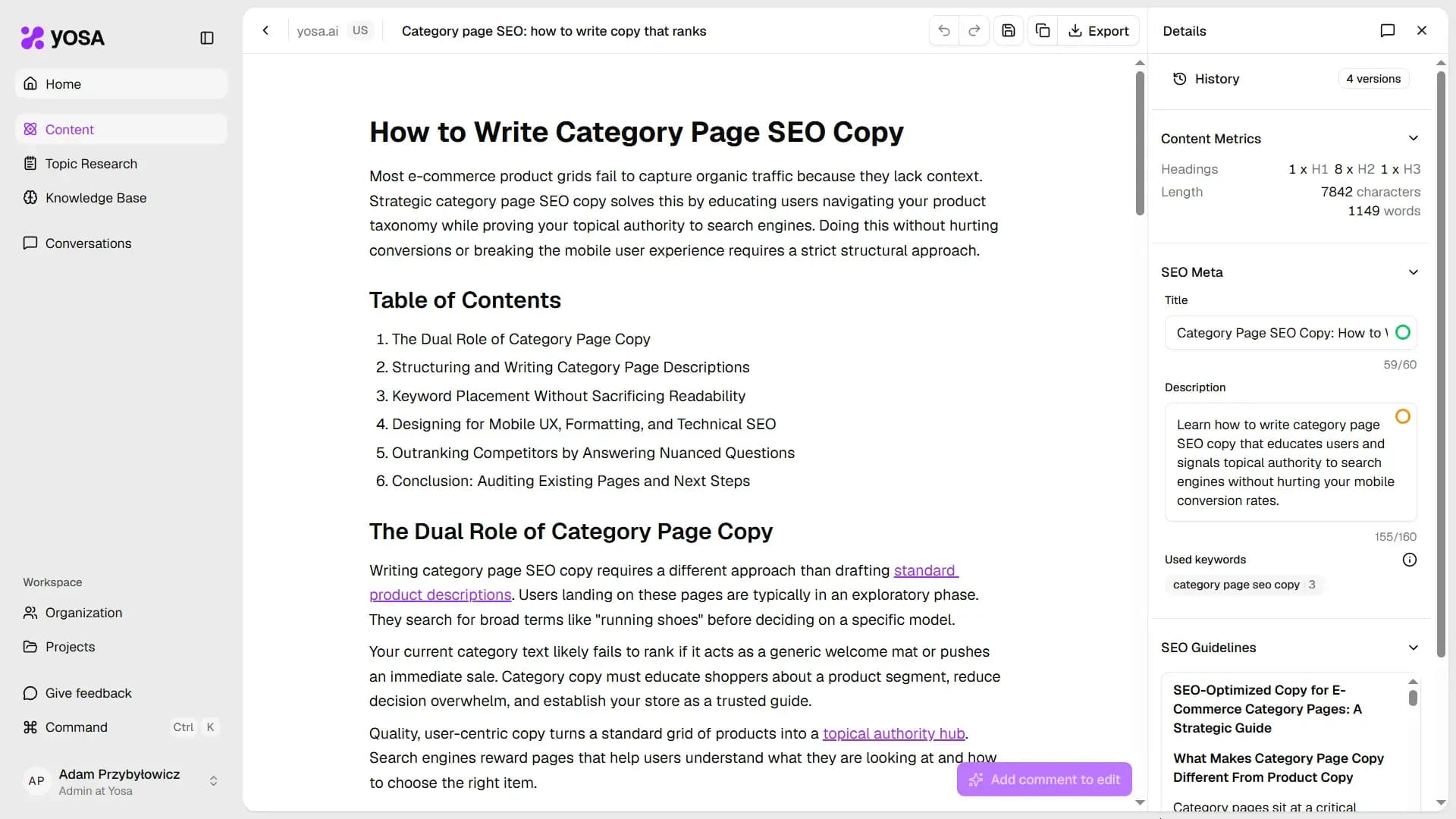
Top bar elements:
Element | What it does |
← Back | Returns to the previous view |
Project / Language breadcrumb | Shows which project and market this canvas belongs to |
Article title | Displayed at the top of the editor |
Undo/Redo | Undoes the previous change or restores an undone one |
Save icon | Manual save (Canvas also autosaves continuously) |
Copy icon | Copies the full content to clipboard |
Export | Download the canvas in your preferred format |
Details / Info panel | Opens the right-side panel with SEO meta and version history |
Chat icon (inside Details / Info panel) | Opens the chat panel for AI-assisted editing |
Bottom right:
- Add comment to edit / Apply X changes - sends comments added to text fragments to edit to YOSA
Details panel
The Details panel inside Canvas shows additional info about your content piece.
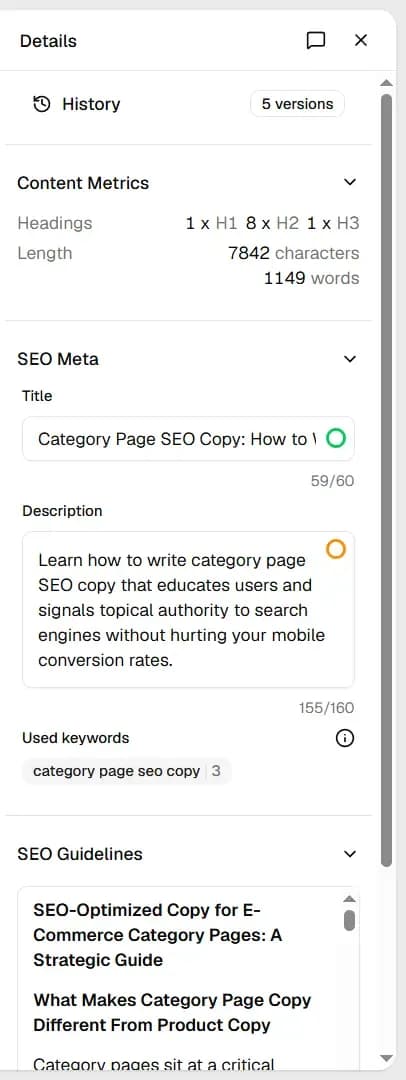
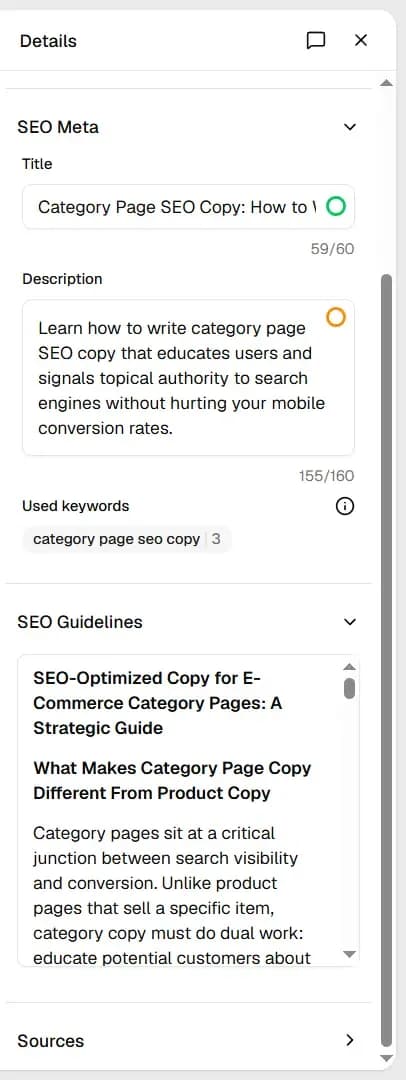
Element | What it shows |
Content Metrics | Number of H1–H3 headings in the text; length of the text in characters (including spaces) and words. |
SEO Meta | Auto-generated SEO title and meta description, editable directly in the panel. Both are added below your content when using the Copy button or exports. |
Used keywords | Keywords used in the text, with how many times each was used. |
SEO Guidelines | Full text of the guidelines created before generation and used to create and optimize your content. |
Sources | Full list of sources used to create your content - internal (from your Knowledge Base) and external (from the web). |